|
ITINERARY
From
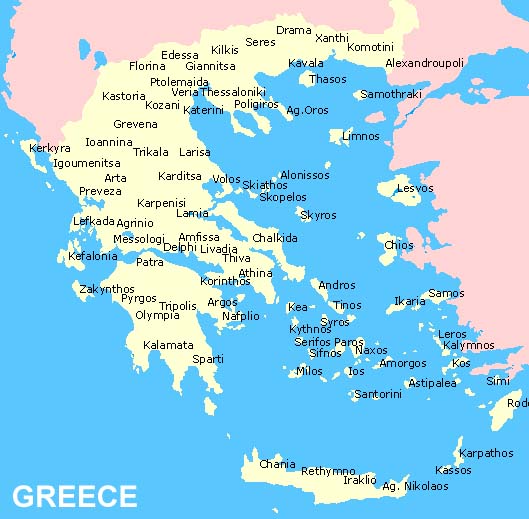
our home port in Athens, Alimos Marina, you can follow any sailing routes
to the beautiful Greek coast line or islands, where you will find many
Cosmopolitan towns, villages, ancient temples, Byzantine castles, small
fishing ports and unspoiled anchorages.
Greece
has over 2.000 islands, destination for celebrities and VIPs from all over
the world.
IT
WILL BE OUR PLEASURE TO OFFER YOU ADVISE AND SUGGESTIONS IN PLANNING YOU
ITINERARY.
SUGGESTED
ITINERARIES
DURATION
4 DAYS
ROUTE
1
ATHENS-KEA-MYKONOS-PAROS-SIFNOS-ATHENS
ROUTE
2
ATHENS-HYDRA-NAFPLIO-SPETSES-EPIDAVROS-ATHENS
DURATION
7 DAYS
ROUTE
3
ATHENS-HYDRA-SIFNOS-MYKONOS-SANTORINI-PAROS-
-SYROS-KEA-ATHENS
ROUTE
4
ATHENS-EPIDAVROS-HYRDA-NAFPLIO-MONEMVASIA-
-KITHIRA-SPETSES-POROS-ATHENS
DURATION
10 DAYS
ROUTE 5
ATHENS-KEA-MYKONOS-NAXOS-SANTORINI-IOS-PAROS-
-SERIFOS-KYTHNOS-ATHENS
DURATION
4 DAYS
ROUTE
1
ATHENS:
Is
the symbol of freedom, art and democracy in the conscience of the
civilized world. In the center of town are two hills, the Acropolis with the
monuments from the Age of Pericles, and Lucabetus with the picturesque chapel
of Saint Giorgis.
KEA:
The
exceptionally picturesque island lies 15 miles from Athens from the
south-east coast of
Attica. Under Ottoman rule it was a pirates’ haven, when it was also
called Zea, Zia or Tzia.
The sea at Kea is crystal clear, the beaches are wonderful and the taverns
are traditional
Greek and you will never forget. When ones see the island from far away it
seems barren,
but in reality there are plenty of oak trees. Fruits, barley and silk are
produced.
MYKONOS:
Is
world famous. It is no coincidence that this, the most cosmopolitan of all
Greek islands, attracts so many visitors from all over the globe,
including large numbers of celebrities, VIPs and intellectuals. Here, the steep
mountains to be encountered in most of the Cyclades give away to low, rocky hills
which compine
with superb beaches to make up the landscape of the island.
PAROS:
The
third largest of Cyclades after Naxos and Andros has developed into center
of tourism in recent years. Gently, rolling hills surround the
south-east of the island which is predominately
agricultural
and is occupied by endless Vineyards, and lock within themselves the
famous Parian marble.
The coastline is indented, with numerous small inlets and two large
bays, those of NAOUSSA in the North
and PARIKIA in the west. Paros has been inhabited since very ancient times, and was one of the centers of the Cycladik
Civilization.
SIFNOS:
Was famous in ancient time for the wealth, which came from its gold and
silver mines. Tourist facilities of Sifnos are of good standard and it possible
for the visitor to combine a lively nightlife with a peaceful island existence close
to nature.
ROUTE
2
ATHENS:
Is the symbol of freedom, art and democracy in the conscience of the
civilized world. In the center of town are two hills, the Acropolis with the
monuments from the Age of Pericles, and Lucabetus with the picturesque chapel
of Saint Giorgis.
HYDRA:
This
rocky island is famed as a cosmopolitan and cultural centre and has played
an important role in Greek history. For all those who have culture
and art, Hydra is a famous meeting point and there are many galleries throughout
the island.
NAFPLIO:
Capital
of the prefecture and one of the loveliest towns in all Greece. Nafplio,
is
full of the joy of life: it is nobility and calm found in Minoan frescoes;
it is Syntagma square, which strikes you as more gracious and delightful
every time you see it; it is the little restaurants on the waterfront, the
open-air cinemas, the bars and the music that every evening takes you closer to the
people, the sea and the stars.
SPETSES:
The
island is famous its unique architecture, picturesque mansions and varied landscape. Motor vehicles are not allowed on the island and the
most popular means of transport are by horse and cart or bicycle.
EPIDAYROS:
The
theater the Epidavros is the most famous and best preserved of all the ancient theaters in Greece. Built of limestone, and every
summer it comes alive. The village of Palia Epidavros, is a seaside
settlement with a small harbor, nestled
in a plam thick with olive and orange trees, rimmed with scenic beaches and several taverns.
DURATION
7 DAYS
R0UTE
3
ATHENS:
Is the symbol of freedom, art and democracy in the conscience of the
civilized world. In the center of town are two hills, the Acropolis with the
monuments from the Age of Pericles, and Lucabetus with the picturesque chapel
of Saint Giorgis.
HYDRA:
This rocky island is famed as a cosmopolitan and cultural centre and has
played an important role in Greek history. For all those who have culture
and art, Hydra is a famous meeting
point and there are many galleries throughout the island.
SIFNOS:
Was
famous in ancient time for the wealth, which came from its gold and silver
mines. Tourist facilities of Sifnos are of good standard and it possible
for the visitor to combine a lively nightlife with a peaceful island existence close
to nature.
MYKONOS:
Is world famous. It is no coincidence that this, the most cosmopolitan of
all Greek islands, attracts so many visitors from all over the globe,
including large numbers of celebrities, VIPs and intellectuals. Here, the steep
mountains to be encountered in most of the Cyclades give away to low, rocky hills
which compine with superb beaches to make up the landscape of the island.
SANTORINI:
Should
not be missed. Santorini is like two islands. One side is the crater with the villages of THIRA and OIA and the other side where the town of PERISSA and KAMARI attract to their black sand beaches.
PAROS:
The third largest of Cyclades after Naxos and Andros has developed into
center of tourism in recent years. Gently, rolling hills surround the
south-east of the island which is predominately
agricultural
and is occupied by endless Vineyards, and lock within themselves the famous Parian marble.
The coastline is indented, with numerous small inlets and two large
bays, those of NAOUSSA in the North and PARIKIA in the west. Paros has been
inhabited since very ancient times, and was one of the centers of the
Cycladik Civilization.
KEA:
The exceptionally picturesque island lies 15 miles from Athens from the
south-east coast of
Attica. Under Ottoman rule it was a pirates’ haven, when it was also
called Zea, Zia or Tzia.
The sea at Kea is crystal clear, the beaches are wonderful and the taverns
are traditional
Greek and you will never forget. When ones see the island from far away it
seems barren,
but in reality there are plenty of oak trees. Fruits, barley and silk are
produced.
ROUTE
4
ATHENS:
Is the symbol of freedom, art and democracy in the conscience of the
civilized world. In the center of town are two hills, the Acropolis with the
monuments from
the Age of Pericles, and Lucabetus with the picturesque chapel of Saint
Giorgis.
EPIDAYROS:
The theater the Epidavros is the most famous and best preserved of all
the ancient theaters in Greece. Built of limestone, and every
summer it comes alive. The village of Palia Epidavros, is a seaside
settlement with a small harbor, nestled in a plam thick with olive and orange
trees, rimmed with scenic beaches and several taverns.
HYDRA:
This rocky island is famed as a cosmopolitan and cultural centre and has
played an important role in Greek history. For all those who have culture
and art, Hydra is a famous meeting point and there are many galleries throughout
the island.
NAFPLIO:
Capital of the prefecture and one of the loveliest towns in all Greece.
Nafplio, is full of the joy of life: it is nobility and calm found in Minoan
frescoes; it is Syntagma square, which strikes you as more gracious and delightful
every time you see it; it is the little restaurants on the waterfront, the
open-air cinemas, the bars
and the music that every evening takes you closer to the people, the sea
and the stars.
MONEMVASIA:
In
Greeks means one entrance: the long causeway joining it to the mainland
was and is the only access to the rock. Time stopped here in the
Middle ages. Castles and ramparts, old mensions, little houses, narrow
lanes pawed with stone, slabs, churches with crumbling facades, old low
archways
semi-destroyed stairways. Monemvasia, is revelation that leaves one with a heavy heart and deep nostalgia, a feeling that one would
like to stay here forever.
KITHIRA:
Kithira
or Cythera has been known as the island of Afhodite. The island lies opposite the eastern tip of Peloponnese.
SPETSES: The island is famous its unique architecture,
picturesque mansions and varied landscape. Motor vehicles are not allowed on the island and the
most popular means of transport are by horse and cart or bicycle.
POROS:
The
ancient ruins of the Temple of Poseidon are to found 5 km from the main
town. Poros
is build in keeping with Greek island tradition with blue and white
colors. In
Poros there are numerous small inlets with sandy beaches and pine trees
which almost reach the sea.
DURATION
10 DAYS
ROUTE
5
ATHENS:
Is the symbol of freedom, art and democracy in the conscience of the
civilized world. In the center of town are two hills, the Acropolis with the
monuments from the Age of Pericles, and Lucabetus with the picturesque chapel
of Saint Giorgis.
KEA:
The exceptionally picturesque island lies 15 miles from Athens from the
south-east coast of
Attica. Under Ottoman rule it was a pirates’ haven, when it was also
called Zea, Zia or Tzia.
The sea at Kea is crystal clear, the beaches are wonderful and the taverns
are traditional
Greek and you will never forget. When ones see the island from far away it
seems barren,
but in reality there are plenty of oak trees. Fruits, barley and silk are
produced.
MYKONOS:
Is world famous. It is no coincidence that this, the most cosmopolitan of
all Greek islands, attracts so many visitors from all over the globe,
including large numbers of celebrities, VIPs and intellectuals. Here, the steep
mountains to be encountered in most of the Cyclades give away to low, rocky hills
which compine with superb beaches to make up the landscape of the island.
NAXOS:
The
largest and most fertile of the Cycladic islands, lies almost at the
center of the Aegean. Medows runnning down to vast beaches, cliffs sinking
suddenly into the sea, rocky mountains side-by-side. The coastline of Naxos is abrupt on
the south side and more sheltered to the west, with numerous inlets and sandy beaches.
SANTORINI:
Should not be missed. Santorini is like two islands. One side is the
crater with the villages of THIRA and OIA and the other side where the town of
PERISSA and KAMARI attract to their black sand beaches.
IOS:
There
is no place in the world like IOS. Is where spring break lasts all summer. MILOPOTAMOS
beach is one of the largest and finest in Greece. Also are other beaches in
MANGANI, VALMAS, PSATHI OR KOLITZANI.
PAROS: The third largest of Cyclades after Naxos and Andros has developed into
center of tourism in recent years. Gently, rolling hills surround the
south-east of the island which is predominately
agricultural and is occupied by endless Vineyards, and lock within themselves the famous Parian marble. The coastline is indented, with numerous small inlets and two large
bays, those of NAOYSSA
in North and PARIKIA in the west. Paros has been inhabited since
very ancient times, and was one of the centers of the Cycladik
Civilization.
SERIFOS:
It
is a charm all of its own, something in the unique “atmosphere” of the
island, which attracts an ever-increasing number of visitors from Greece
and abroad? The greatest attraction of Serifos is its magnificent beaches (Mega
Livadi, Koutalas, Agios Sostis, Psili Amos, Agios Ioannis, Sikamia).
KYTHNOS:
Famous
in antiquity for the excellence of its administration that recent
archaeological finds have provided evidence of the earliest presence of man
in Cyclades. The terrain is mainly mountainous, but the harshness of the bare
earth is relieved here and there are by vines of fig trees like brushstrokes on it,
while pretty little bays form indentations in its coast-line.
|